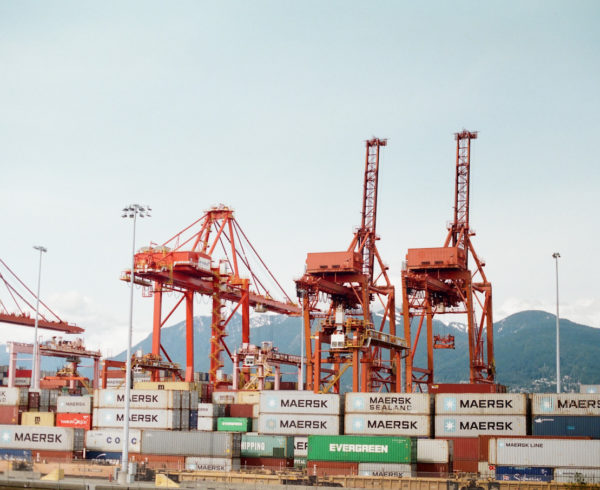
The COVID-19 pandemic is not just an existential threat to human health and economic wellbeing but represents the schism of local markets relying on international suppliers for essential goods. When those supply chains are interrupted, the availability of such goods is compromised.
Despite significant economic growth in East Africa, averaging 5.8% annually from 2015-2019, the region faces persistent structural trade deficits where imports continue to outstrip exports. This structural imbalance in the economy is also reflected in low levels of industrialisation at 8.9% of GDP. East Africa’s manufacturing levels are relatively low with exports dominated by primary commodities.
Africa has the youngest population worldwide with 77% under the age of 35. In the context of rising unemployment and poverty levels, it will be imperative for the East African Community (EAC) to create vibrant economies based on higher value addition that can absorb this growing workforce.
The COVID-19 crisis has both brought this issue to the fore and further exacerbated the situation. Measures to contain the spread of the virus, such as lockdowns, have led to a sharp decline in demand and significant disruption in global, regional, and local supply chains. This is reflected in the reduction in imports and dramatic impact on some export sectors such as petroleum, basic food items, and life-saving medicines, forcing governments in the region to think deeply about critical service and product supply. As a net importer, East Africa has doubled efforts to create local value addition in areas currently dominated by foreign actors.
Our understanding of this context is informed by the work Letsema East Africa has conducted in the region. Nowhere is this more apparent than the procurement, production, and sale of essential pharmaceutical products. Kenya, as an example, currently procures approximately 90% of its medicines from out-of-country suppliers, with international non-governmental organisations (NGOs) playing an outsized role within these procurement value chains.
To understand how the region can become a more equitable player in its own destiny where essential goods are concerned, it is prudent to understand the region’s constraints.
Local production does not mean access
Local production has been on the agenda for the last 10 years and more, with the goal of increasing access to critical medicines and health care.
The premise, that increased local production increases local access, has two important elements that need to be negotiated: If it is produced locally, will it be available in pharmacies and on shop shelves, and second, will the local population be able to afford it?
The answer lies in the competing forces of economy of scale, and supply & demand,
Pharmaceuticals is a highly established industry has traditionally been dominated by European, Japanese, and American companies with decades of R&D, manufacturing capacity and market experience. The landscape has shifted with the introduction of newer producers in the sector, such as India and China, who produce more affordable generics and are able to rely on their own sizeable local markets to stimulate national pharmaceutical value chain growth. For example, India as of 2019, had over 20,000 pharmaceutical producers operating in the country. In Kenya, there are approximately 35, and across East Africa in total, 60.
This is important because at such levels, the likes of India and China can operate at an economy of scale that brings down production costs so that they are attractive to the local market and capable of competing on a price level with similar alternatives. It is difficult for East African producers to compete with these cheaper Asian products for several reasons:
- Production in East Africa is largely limited to traditional and simpler pharmaceutical formulations, characterised by very low-cost margins
- Over 90% of inputs (both active and non-active ingredients) used in these formulations are imported, which has cost implications
- Most of local producers are not operating at full capacity, increasing unit costs
Reaching sufficient economies of scale is a prerequisite for local companies to compete on price and create a more sustainable local pharmaceutical industry.
However, solving for it means addressing the paradox the region finds itself in.
A glass ceiling of scale, cost and compliance
For developing countries, the preceding decades of under investment and lack of resources have reduced the ability of these governments to adequately meet the medical needs of their populations.
The significant unmet need in East Africa (and broader sub-Saharan African region) has meant that international NGOs play an outsized role in the procurement of medicines within the region. For example, NGOs are responsible for procuring 30% of Ugandan medicines. The Global Fund for AIDS, Tuberculosis and Malaria (The Global Fund) and the U.S President’s Emergency Plan for AIDS Relief (PEPFAR) are the largest non-governmental procurers of medicines in the region through several treatment programmes for a variety of communicable diseases
Despite the presence of a nascent pharmaceutical industry in countries such as Kenya and Uganda, NGO procurement needs are met by globally manufactured products. These organisations have strict regulations around the procurement of medicines, pertaining to both price and quality, acting as a high barrier of entry for local firms.
The NGO’s dominant position is further strengthened by being procurement conduits for global pharmaceutical companies. While local supplier sourcing is encouraged, preference is for centralised procurement and the use of established market relationships that adhere to global quality standards (such as Good Manufacturing Practices (GMP) and World Health Organisation (WHO) pre-qualification) as this allows them to go directly to market at speed.
As a result, local producers are largely ‘locked out’ of the regional market, servicing local demand at inflated prices.
Without access to regional demand, it is near impossible for local companies to reach the economies of scale required to compete with cheaper imports in terms of price. This vicious circle is highly difficult to transcend because pharmaceuticals is a capital-intensive industry dependent on the existence of enabling infrastructure and requisite qualified skills. Yet, breaking the dependence on NGO support is complex, requiring a multi-prong, long term approach. However, there is little local incentive to export or to access large-scale regional procurement platforms.
In Kenya, attractive preferential procurement schemes in the public health sector and the fact that majority of local producers are small, family-owned businesses with limited capacity have kept the focus on the local market. For those who set their sights beyond the local market, compliance to global quality and regulatory standards are inhibitive. Local suppliers interact with a system that poses a high barrier of entry. Compliance to GMP and attainment of WHO PQ is resource intensive, highly administrative, complex and time-consuming. Even if a company enters such processes, receiving the necessary regulatory clearance is not guaranteed, leading to a local view that even entering such processes is akin to an expensive lottery.
Despite the challenges identified, there is a very real opportunity to leverage regional market demand to support the viability of local pharmaceutical production in the region.
Key market drivers, such as economic and population growth, an emerging middleclass and increased disease burden with significant unmet needs presents an opportunity for developing a local pharmaceutical industry in the East African region.
Push and pull market systems: Linking into global demand
Following an understanding of market systems, the solution lies in leveraging both push and pull dynamics through linking into global market demand (pull) and creating an environment for local investment (push).
A possible short- to medium-term solution is for local pharmaceutical suppliers to work closely with NGOs in three interlocked ways:
- Form a relationship capable of bringing the necessary skills into a local context to act as a catalyst for local knowledge growth
- Receive direction on formulations, certification, GMP, and regulatory compliance to help local firms navigate what they see as an arduous and inhibitive process, and
- Access NGO medicine and product databases and research to form a picture of what strains, conditions and sicknesses are not currently being treated, specifically those strains of disease only found within the region
Equipped with this knowledge, local suppliers can begin to target specific niche markets with more complex formulations with higher margins. Global manufacturers may not have the same incentive to undertake the necessary R&D to create products that only treat specific strains given the smaller production scale in this respect, benefitting local producers. Local manufacturers will be able to create more complex formulations and which are not susceptible to the same competition as simpler low-margin products.
In addition, with NGO guidance, experience and expertise, local suppliers will be able to meet the required regulatory thresholds to manufacturer such products to a high level of quality with a degree of certainty that incentivises production and where possible, local skills development.
Once such a manufacturing base is established, a virtuous circle is created where NGOs will be incentivised to work with local companies providing unique products applicable to that specific region and certain disease strains. In working with NGOs, local manufacturers also have an opportunity to access those preferential market relationships the NGOs have formed with international pharmaceutical players.
Critically, to achieve the maximum benefit from such relationships, an enabling environment must exist. Governments must recognise the importance of having a coherent, structured and accessible pharmaceuticals manufacturing policy in place, a critical building block in encouraging international investment and skills transfer. The lack of such a policy serves to discourage investment and local sector value addition.
Creating a local pharmaceuticals ecosystem to support industry growth
The pharmaceuticals industry is highly complex, and while local manufacturers and the governments that regulate them can create market linkages and products which grant them access to international investment and skills, only if all the right elements are in place can an optimal value-creating ecosystem exist which supports the local pharmaceutical sector.
Engagement with actors in the public, private and non-governmental sectors highlight fundamental elements to the growth of a local pharmaceutical industry:
- Clear industrial pharmaceutical policy/directive
The establishment of an enabling local environment to support industry growth is a long-term and multi-faceted endeavor, requiring involvement from various actors. Government has an important role to play in steering the direction of this endeavor by developing an agenda for local pharmaceutical production. - Sound institutional and legislative arrangements
In the development of new or improved products, R&D activities have significant cost and risk implications. To attract foreign investment and promote greater local participation in R&D activities, it is critical that legislative and institutional arrangements have provisions for the protection of IP and other proprietary information. - Industry incentives
Incentives play an important role in attracting investment, improving the quality of local industry, and increasing the export capability of local firms. Government needs to ensure the range of incentives are aligned to the national agenda to drive the right behaviour. - Strong skills base
The development, production and sale of pharmaceutical products is complex and operates within a highly regulated context. Local industry requires access to sufficient qualified and sufficiently experienced industrial pharmaceutical skills. - Proactive investor attraction
The attraction of global pharmaceutical producers and related investment is an important component in creating a local eco-system. These firms support the transfer of skills and technology and provide a market for local specialized skills while local industry grows.
Opportunity beckons if the right foundations are laid
The opportunity exists for East Africa and its constituent states, and geographies like it, to reduce their dependency on pharmaceutical imports. To succeed, governments and local industry stakeholders must ensure that deep foundations are in place, so the long-term development and evolution of the sector is possible.
Only then, if a long-term view is adopted which accounts for the market’s inherent complexities, can the region begin to realise the benefits of local pharmaceutical production, strengthening its position when future supply chain shocks occur.
Letsema’s regional understanding and industry is positioned to support your organisation in addressing these issues.
If you wish to learn more about how Letsema can help your organisation tap into local potential to stimulate both company and economic growth, contact Letsema East Africa at info@letsema.co.ke. You can also connect with Letsema on LinkedIn or visit our website.